Who we are
Voluntary Alliance for Sovereignty (VAS) was registered in the State of New Jersey in 2024 and recognised by the IRS as a 501(c)(3) public charity. We are a small group of professionals in the United States who have known grassroots work in India for many years, and who wanted to give it a steady American home.
Our work here is to raise awareness, build a community of supporters, and route American philanthropy to a network of community-led partner organisations in India, from the Himalaya of Ladakh to the farms of Karnataka, and from the Bhil villages of Rajasthan to the hills of Nagaland. We keep overheads low. All directors serve without compensation.
Why "sovereignty"
Our name is an English rendering of an old Indian word: Swaraj. Mahatma Gandhi used it to mean far more than political independence. For him, Swaraj meant self-rule in the everyday sense: villages able to grow their own food, keep their own seed, educate their own children, care for their own sick, and govern their own common lands and water, with dignity and without dependence.
“The word Swaraj is a sacred word, a Vedic word, meaning self-rule and self-restraint, and not freedom from all restraint which ‘independence’ often means.”
Mahatma Gandhi, Young India, 19 March 1931
That is the sovereignty our partners work for. The communities they serve do not see themselves through the lens of poverty or underdevelopment. They see themselves through the lens of resilience, knowledge, and agency. Read more about Gandhiji's constructive programme and how it lives on in our partners' work →
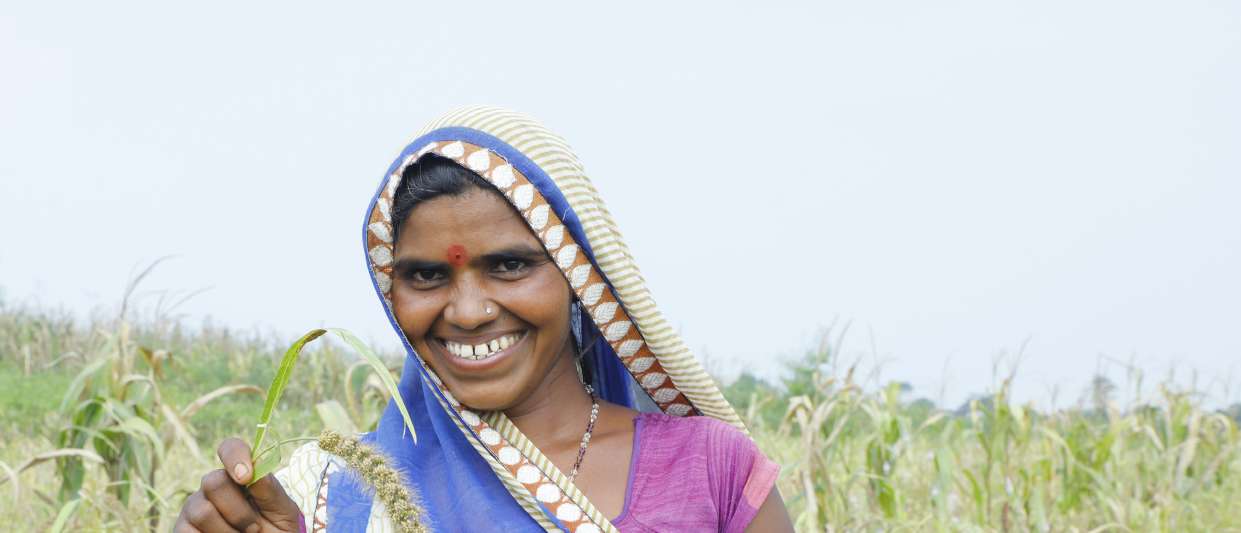
How we choose partners
We look for Indian organisations that meet five tests.
- Rooted. They live and work alongside the communities they serve, often for decades, and are led by people from those regions.
- Community-led. Villages, women's collectives, farmers' groups, and children's councils set the priorities. The organisation facilitates; it does not decide.
- Working for sovereignty. Their work builds lasting control over food, seed, water, land, knowledge, health, and local governance, not dependence on outside help.
- With the most marginalised. Adivasi (indigenous) communities, small and marginal farmers, women, children, and families the mainstream has left behind.
- Accountable. Independent governance, audited accounts, and legal eligibility to receive foreign contributions under Indian law.
Today seven organisations make up our partner network. Meet our partners →
Five sovereignties
Across our partners, the work touches five connected forms of sovereignty. Each rests on the others. Communities steward all five together, or none of them well.
What we believe
Our values are not aspirations we hope to grow into. They come from decades of practice by our partners in the field. We hold them too.
Community leadership
Communities lead their own development. They govern collectively and shape the decisions that affect their lives. Outsiders walk alongside, and step back when invited to.
Dignity and self-reliance
Development must build dignity, autonomy, and durable livelihoods. It must not create dependence or extract from the people it claims to serve.
Care for land and life
Human well-being is inseparable from the health of land, water, and forests. We value relationships that hold across generations.
The last person first
Gandhiji asked that every step be tested against the good of the poorest and weakest. We apply the same test to every grant.
Respect for indigenous knowledge
The cultural practices and lived experience of tribal and rural communities are foundations for resilient and just futures, not obstacles to be replaced.
Plain accounting
American donors deserve clear, honest information about where their money goes. Our tax filings are public, and we will publish every grant we make.
Why an American organisation
The simplest reason is that a US 501(c)(3) makes it possible for tax-deductible giving in the United States to reach grassroots work in India through legal, transparent channels.
An organisation registered in India, however respected at home, is hard for an American donor to evaluate: different reporting standards, different regulations, different ways of describing the work. VAS gives American supporters a single point of contact, an EIN they can verify, a board they can hold accountable, and a partner network that has been chosen with care.