Our Partners

Seven organisations. Six regions of India. One principle.

Each of our partners is an independent Indian organisation, rooted in its region and led by people who have spent years, often decades, alongside the communities they serve. They work on different things in very different places. What they share is a way of working: directly with communities, at the grassroots, so that people gain lasting control over their own food, land, water, health, and future. Their impact is the reason VAS exists.

NorthLadakh
NortheastNagaland
EastJharkhand & Uttar Pradesh
CentralChhattisgarh & Madhya Pradesh
WestRajasthan, Gujarat & MP
SouthKarnataka

Figures on this page are our partners' own, taken from their annual reports and published materials. Each profile lists its sources.

Leh, Ladakh · Since the 1978 Indus floods

Leh Nutrition Project

One of the oldest non-profits in Ladakh, LNP began as a relief effort by Save the Children UK after the Indus valley floods of 1978, and was registered as a local society in 1988. It started with village feeding centres and vaccination treks across high mountain passes. Today it builds artificial glaciers and village reservoirs, revives winter greenhouses, and helps women's groups start enterprises in high-altitude villages from Trans-Singela to Changthang.

lnp.org.in →
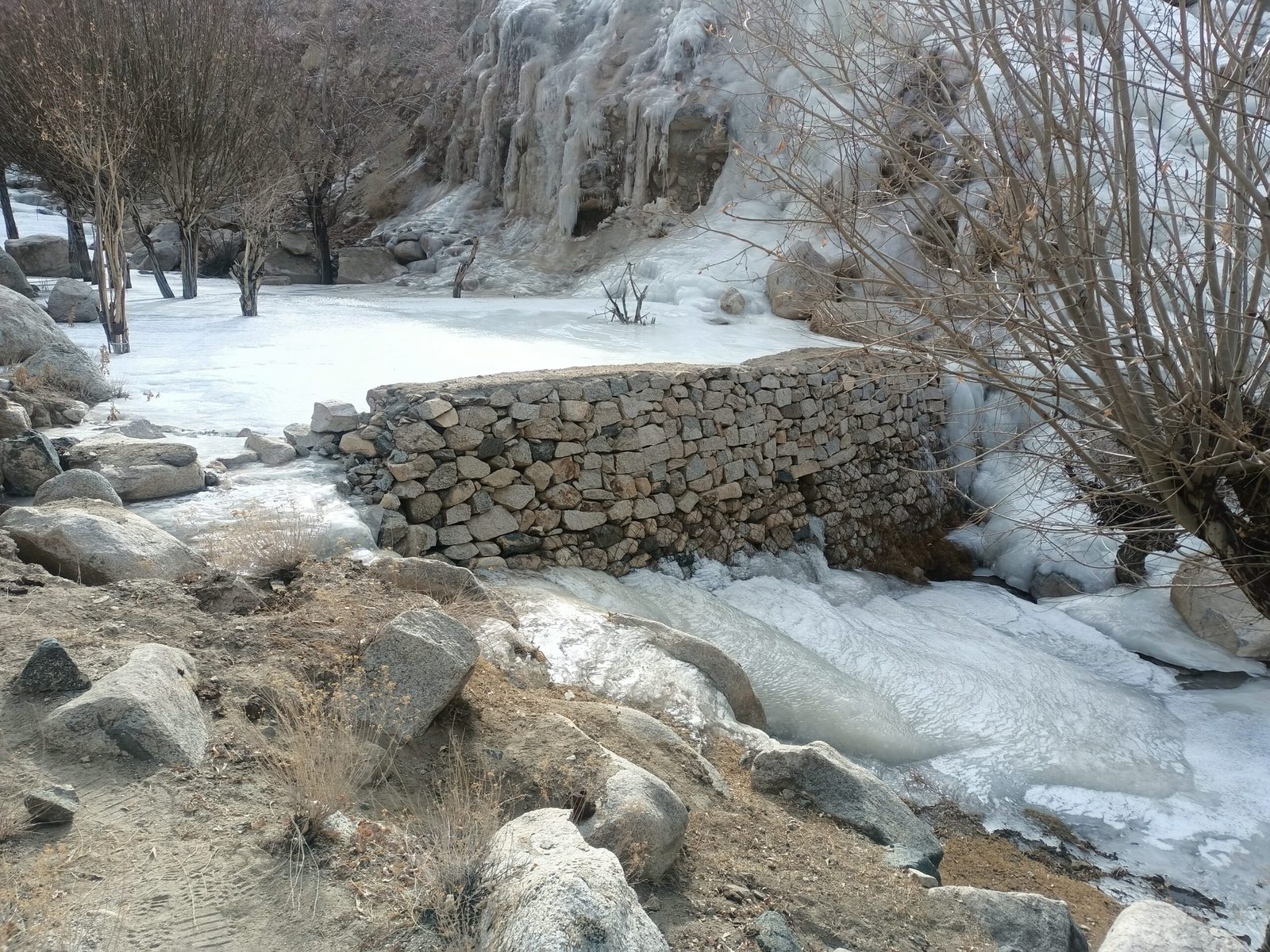
A dry-stone cascade wall of an artificial glacier holding winter ice in Ladakh
4 villageswhere LNP built cascade artificial glaciers in 2023-24: Igoo, Stakmo, Nang and Tsaga
140,731 m³of ice those glaciers can store for farmers' spring sowing
120households growing winter crops in greenhouses, earning ₹15,000–20,000 each over four winter months (2025-26)
1,000+children in 23 villages learning to ice-skate in village camps (winter 2025-26)

Water from winter ice

In Ladakh's cold desert, snowmelt arrives after the sowing season. An artificial glacier slows and freezes winter stream water on shaded slopes, so it melts into the fields in spring when farmers need it. LNP has worked on artificial glaciers for more than two decades, and in 2022 took the idea to the semi-nomadic villages of Tsaga and Mudh in Changthang, where young villagers insisted on joining the water committee.

Women's enterprise

In Saboo village, eight women who had been homemakers formed the Tsamskang self-help group in March 2025 and began baking traditional Pullie cookies. Their monthly profit rose from ₹6,000 to ₹22,000, and the group's collective savings grew from ₹18,000 to ₹2,80,000.

Sources: LNP Annual Reports 2025-26 and 2023-24; lnp.org.in/eyf-wal; COWLAG report.

Dimapur, Nagaland · Founded 2004

PRO RURAL

PRO RURAL works with youth, women, and remote tribal communities across Northeast India. It forms self-help groups and farmers' cooperatives, trains young people in trades and enterprise, runs a mobile health service for villages that have never had a doctor, and responds when floods strike. Its mission, in its own words: to work with needy communities, youth and women through capacity building, livelihood development and youth engagement, and to provide leadership in environmental conservation.

proruralindia.org →
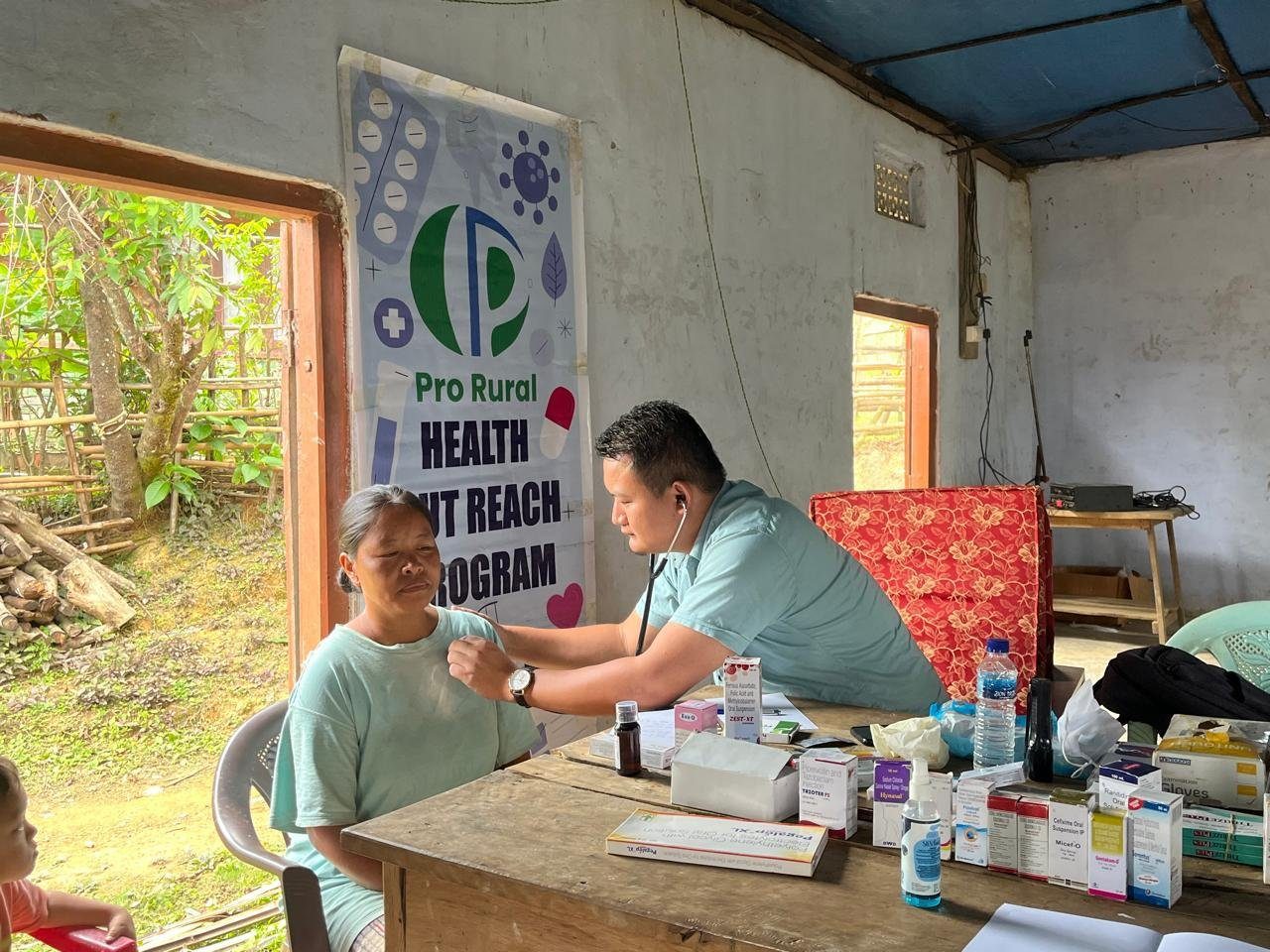
A doctor examines a village woman at a PRO RURAL health outreach camp
323patients screened and treated on the mobile health team's first tour of 8 remote villages in Peren district (August 2024)
93 → 172shareholders in the Nsong farmers' cooperative for Naga King Chilli and spices
412young people trained in four trades across 13 batches (2024-25)
35 & 56community organisations formed and trained, and women's self-help groups facilitated

A doctor, for the first time

The idea for the mobile clinic came when PRO RURAL's director saw young men of Lalong village carrying a patient on a bamboo stretcher. In villages of Peren district, families had carried the sick for hours over rough paths to reach a health centre, only to find no doctor there. On the clinic's first tour, villagers said it was the first time in their village's history that a doctor and nurse had come.

Recognition

  • Special Consultative Status with the UN Economic and Social Council (2023)
  • Green Innovation Award 2023, North East CSOs Network
  • Represented Indigenous communities of the Global South at COP29, Baku (2024)

Sources: Rural health outreach; Institution building; PRO RURAL Annual Reports 2024-25 and 2022-23; UN ECOSOC letter.

Koderma, Jharkhand · Founded 2006

Samarpan

Samarpan (Social Education, Training & Cultural Institute) began as a campaign by Indramani Sahu and his friends to free children from the illegal mica mines of Koderma and bring them into school. Today it runs village crèches and libraries, women's millet enterprises, adult literacy, and water conservation across Koderma and other districts of Jharkhand, and in Chandauli, Uttar Pradesh. Its aim, in its own words: to organise and empower exploited and oppressed communities, enabling them to control natural resources.

samarpanjharkhand.org →
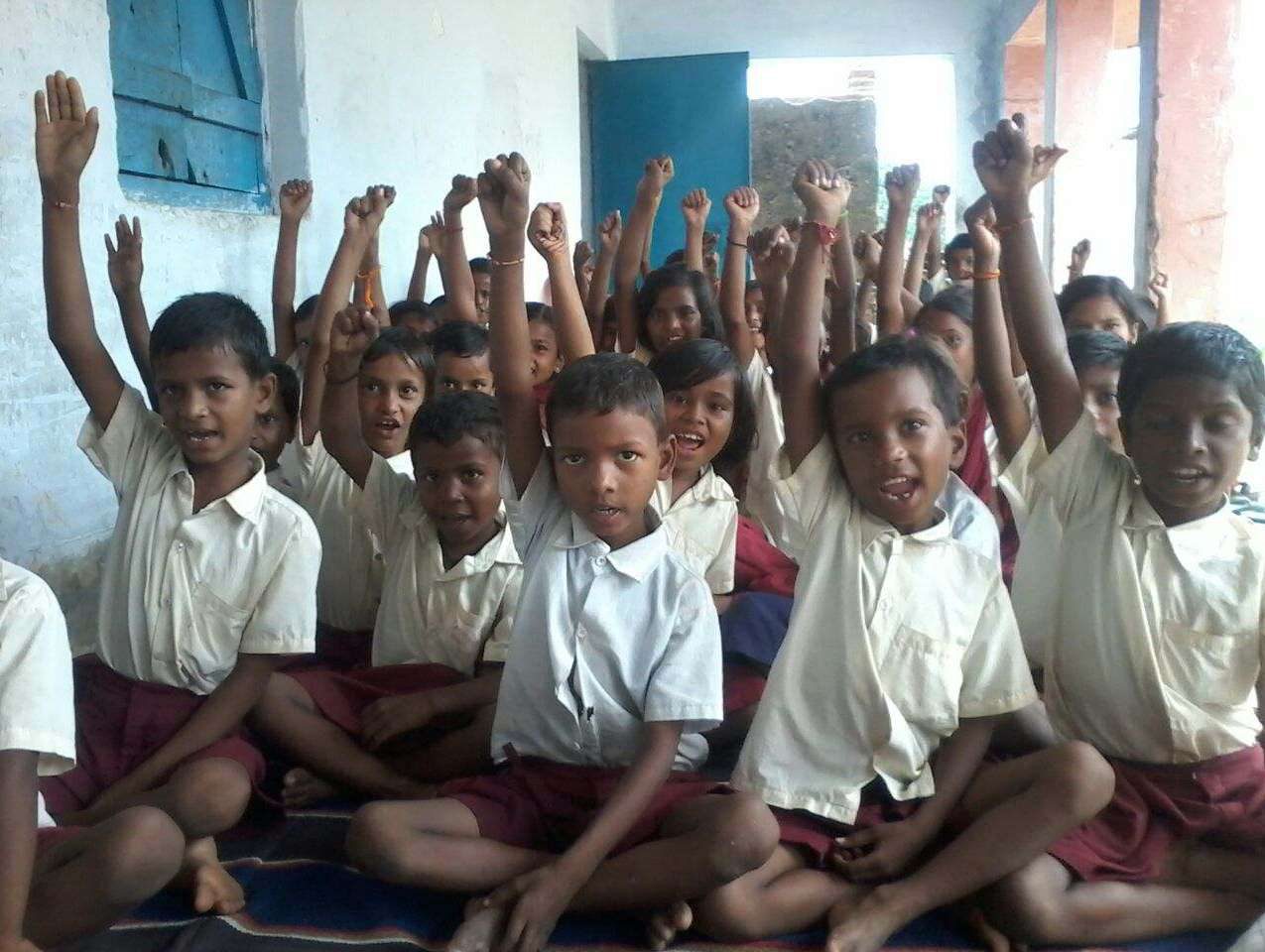
Schoolchildren in uniform raise their hands in a village classroom in Koderma
1,250+children enrolled in school (2022-23)
680children directly protected from exploitation, and 72 child marriages stopped (2021-22)
150women millet farmers whose incomes rose 20–50% (2024-25)
1,200adults, most of them women, who gained functional literacy across 30 centres (2024-25)

Millet, women, and drought

Koderma faces recurring drought, and farm distress pushes families to migrate. Samarpan helped women's groups in Jainagar block take up madua (finger millet), a climate-resilient, low-input grain. 150 women became first-generation millet entrepreneurs, making flour, sattu, laddoos and nutrient powder, and raised their annual incomes from ₹25,000 to between ₹30,000 and ₹37,500.

Recognition

  • Second-best livelihood implementing agency in Jharkhand, NABARD (2020)
  • Best Social Leadership Award, National Foundation for India (2015)
  • A lead civil-society partner of the Responsible Mica Initiative in India

Sources: Samarpan Annual Reports 2024-25, 2022-23 and 2021-22; samarpanjharkhand.org/about.

Ambikapur, Chhattisgarh · Founded 2006

Chaupal

Chaupal Gramin Vikas Prashikshan Evam Shodh Sansthan was founded in 2006 by four Adivasi people's organisations, and is largely run by Adivasis, for Adivasis, across northern Chhattisgarh. It helps village councils claim their legal rights over forests, runs crèches for the youngest children of Pahadi Korwa and other Adivasi families, and supports sickle cell and other care in government hospitals. Its founder and president is Gangaram Paikra. Its mission: building organisations of the marginalised and vulnerable to access their rights to livelihood, nutrition and health with dignity.

chaupalcg.in →
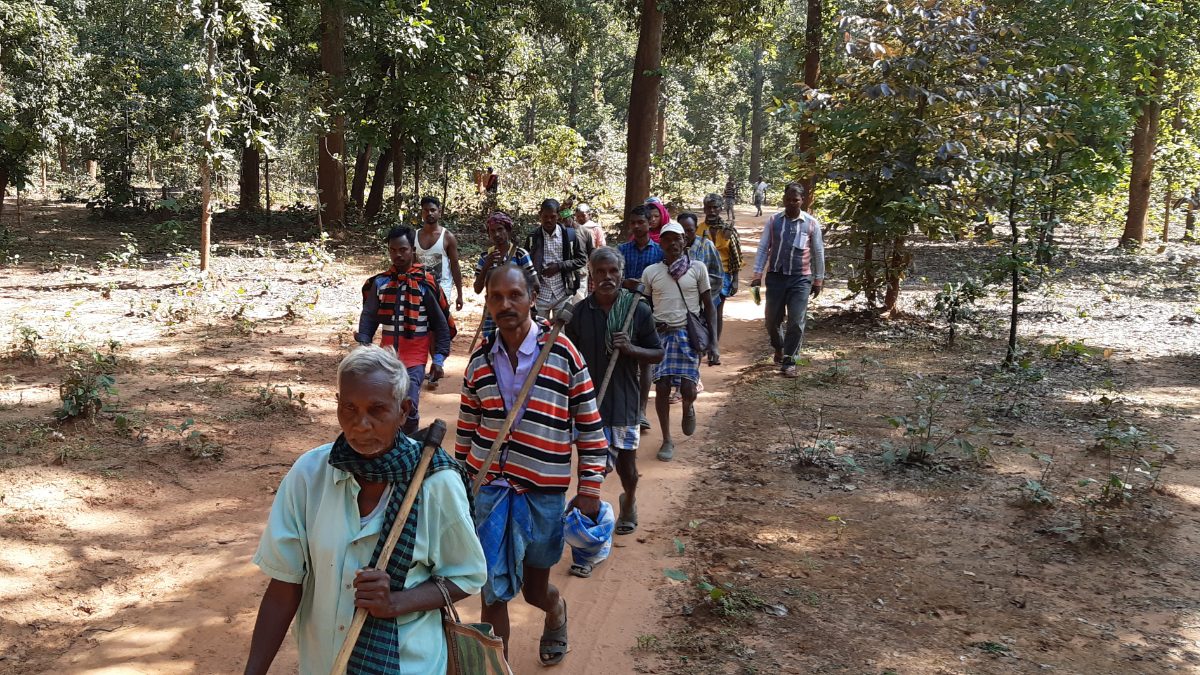
Villagers walking along a forest path in northern Chhattisgarh
262village councils in Surguja supported to claim community forest rights. All 262 received them.
88,096 haof forest now under those communities' recognised rights
1,480Pahadi Korwa households who received individual forest-rights titles
46,877health screenings for sickle cell disease, diabetes, epilepsy and heart disease (2024-25)

From exclusion to ownership

Under India's Forest Rights Act, village assemblies can win legal rights to protect and manage the forests they have always depended on. Chaupal mapped claims, trained committees and stood with communities through years of paperwork. In Bule and Bankesma villages alone, recognition of 748 and 1,248 hectares came in August 2020, after eight years of struggle. In Chaupal's words, "Forests are being protected not out of compulsion, but with a sense of responsibility."

Care for the youngest

In 2024-25, 76 village crèches, called Laika Ghar, cared for around 1,300 children aged seven months to three years across Surguja district, with meals, growth monitoring, and referral of sick children to nutrition centres.

Sources: A quiet shift in Surguja's forest villages; Forest rights for Pahadi Korwas; Chaupal Annual Report 2024-25; Oxfam India.

Bhopal, Madhya Pradesh · Since 2001

Vikas Samvad

Vikas Samvad Samiti ("Dialogue for Development") began in 2001 as an informal group and was registered in 2006. It works with Sahariya and other tribal and Dalit communities in Madhya Pradesh, Bihar, Jharkhand and Rajasthan on the problem it knows best: child malnutrition. Its answer is community-led: kitchen gardens, backyard poultry, women's groups, and villages that monitor the public food and health services they are entitled to. It is led by Sachin Kumar Jain, an Ashoka Fellow.

vssmp.org →
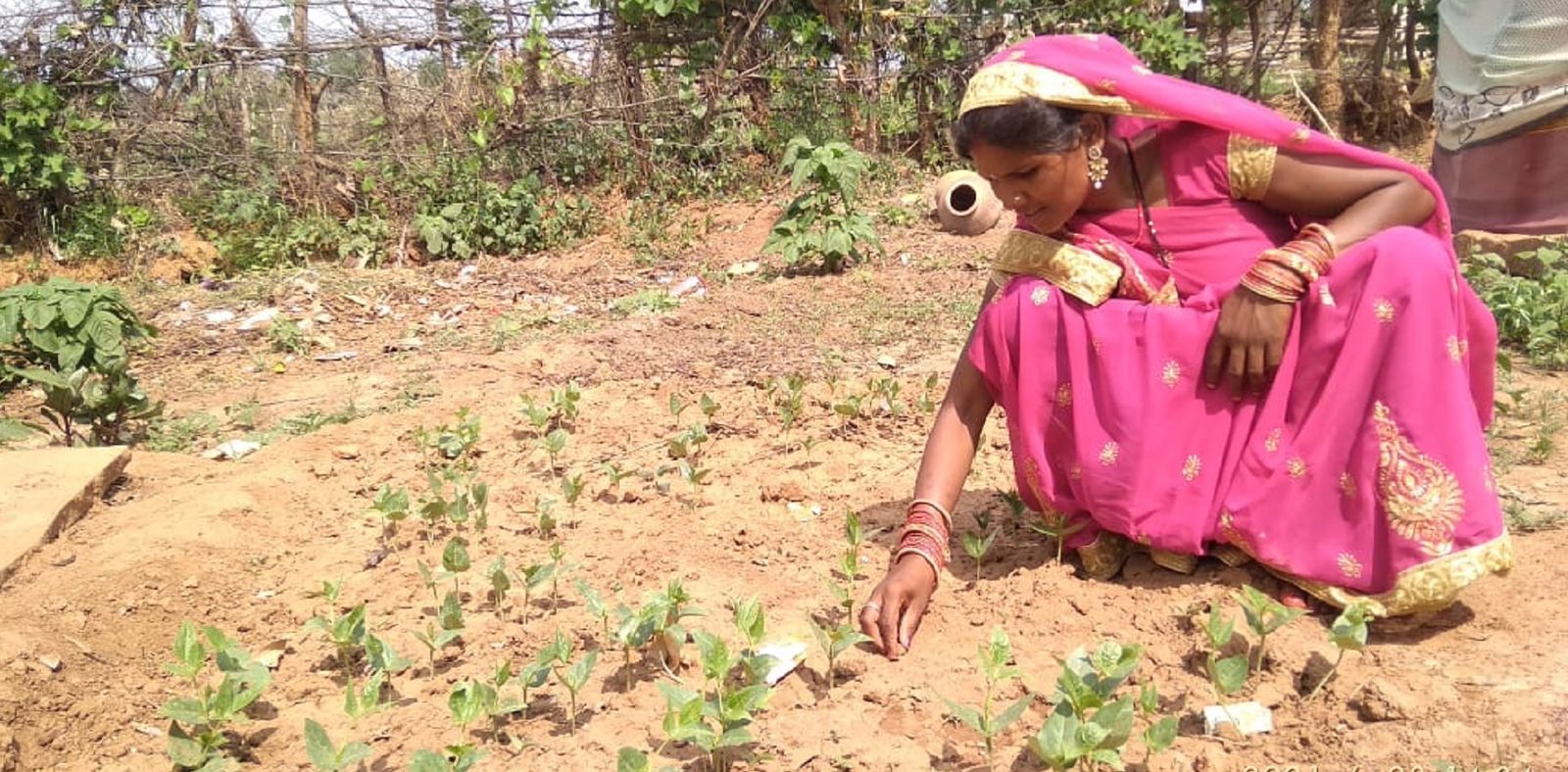
A woman tends seedlings in a household nutrition garden in Madhya Pradesh
~10,000children helped out of malnutrition through its community-embedded model
23,659families in 140 villages of Madhya Pradesh and Bihar in its food-security programme (since 2015)
4,876children reached in 15 Sahariya villages of Pohri block, Shivpuri (since 2018)
37.25 quintalsof garden vegetables shared by 232 families with 425 neighbouring families during the 2020 lockdown

A garden that fed a village

Krishna Mavasi of Jhiriya Ghat in Satna had two malnourished daughters. After a women's group meeting, she planted a backyard garden, and her daughters grew healthy. When the 2020 lockdown came, she gave away 700 kg of vegetables, supporting all 60 families in her village and 150 more nearby. "I don't need money," she said, "but people must grow vegetables."

Fish for the malnourished

In Karaundi village, Umaria, a 2016 survey found 22 severely underweight children. Villagers desilted their three-acre pond through voluntary labour and stocked it with fish. In the first year it yielded 500 kg of fish, given free to 40 families, to pregnant and nursing mothers, and to the 22 malnourished children.

Sources: About Vikas Samvad; Food-security model; CBMM project; Krishna's kitchen garden; Karaundi pond (Hindi).

Banswara, Rajasthan · Registered 1986

VAAGDHARA

VAAGDHARA works with Bhil and other Adivasi families across 1,168 villages where Rajasthan, Gujarat and Madhya Pradesh meet. Guided explicitly by the idea of Swaraj, it builds village institutions (women's leadership groups, children's councils, and farmers' federations) that revive indigenous seed, strengthen nutrition, and help communities shape how public money is spent in their villages. It holds Special Consultative Status with the UN Economic and Social Council.

vaagdhara.org →
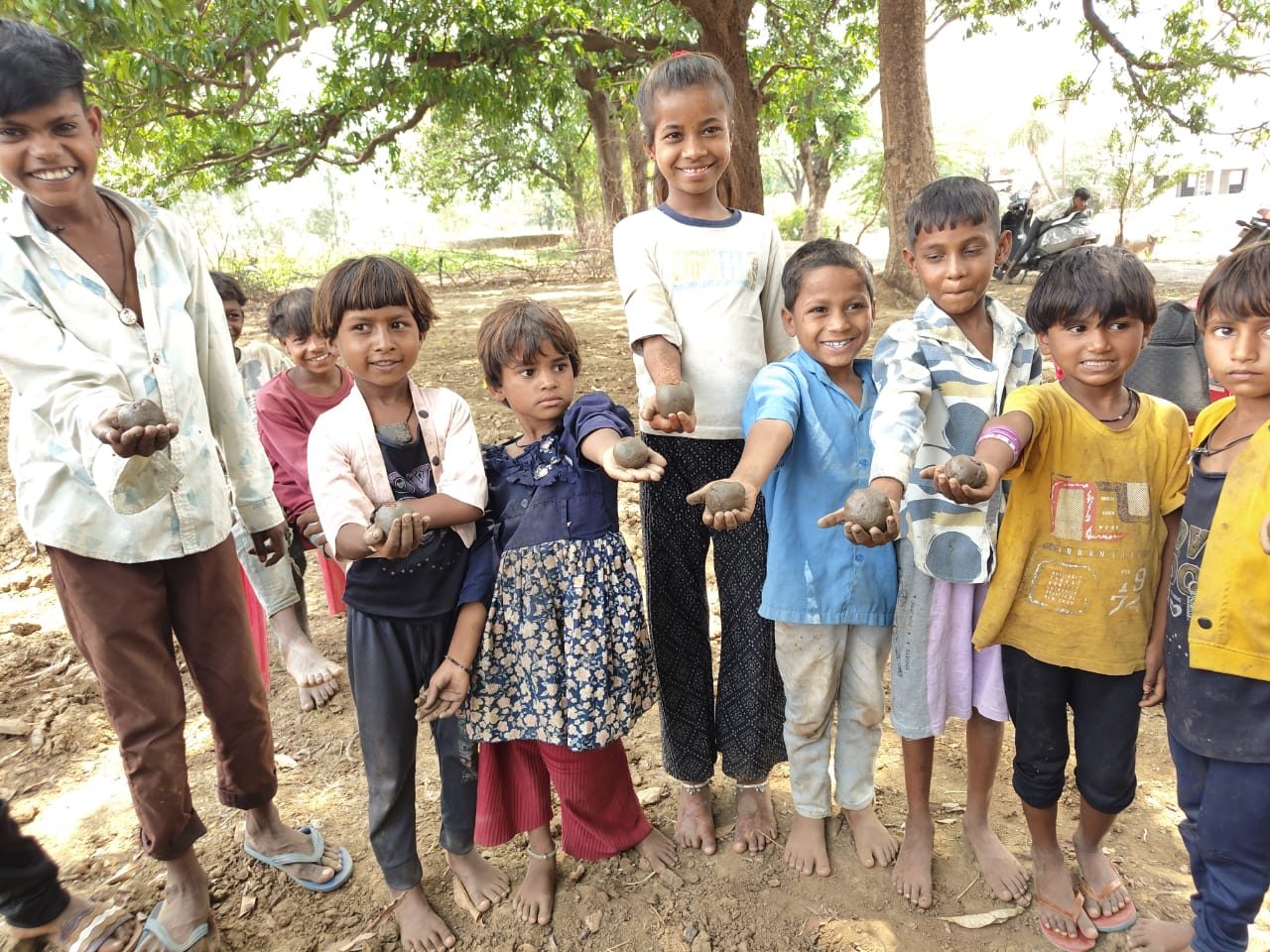
Village children holding out seed balls they made at a seed festival in Banswara
162,000tribal families in 1,168 villages, 14 blocks and 6 districts across three states (2025-26)
74%of farming families in programme villages now sow only their own generational seed (2025-26)
2,768women's leadership groups (Saksham Samooh) of about 20 members each (2025-26)
₹375 croreof public investment unlocked through village development plans led by women's groups (2025-26)

Children who speak, villages that listen

In every programme village, children aged 10 to 18 meet monthly in their own councils, the Baal Swaraj Samooh, and draw up charters of what their village needs. In 2025-26, 34.8% of programme villages formally adopted the children's charter in the Gram Sabha. In Mangela Pada, a 13-year-old girl raised the lack of a girls' toilet at her school; three months later the panchayat approved one.

Seed and collective labour

At 60 seed festivals in 2025, 9,454 people exchanged 122 traditional seed varieties, and eight nearly extinct seeds were identified and revived. Through Halma, a Bhil tradition of voluntary collective labour, communities completed 35,472 actions conserving 7,709 hectares of land in a single year.

Sources: VAAGDHARA Annual Reports 2025-26 and 2024-25; UN eSANGO profile.

Bengaluru, Karnataka · Founded 2001

Sahaja Samrudha

Sahaja Samrudha ("Bountiful Nature") is a farmers' movement started in 2001 by seed saver G. Krishna Prasad, an Ashoka Fellow. In its own words, it is "a people's movement for safeguarding agrobiodiversity, building sustainable villages, and ensuring food futures the organic way." Its network of farmer-breeders keeps hundreds of traditional rice, millet and vegetable varieties alive, runs community seed banks, and helps women's groups build millet enterprises.

sahajasamrudha.org →
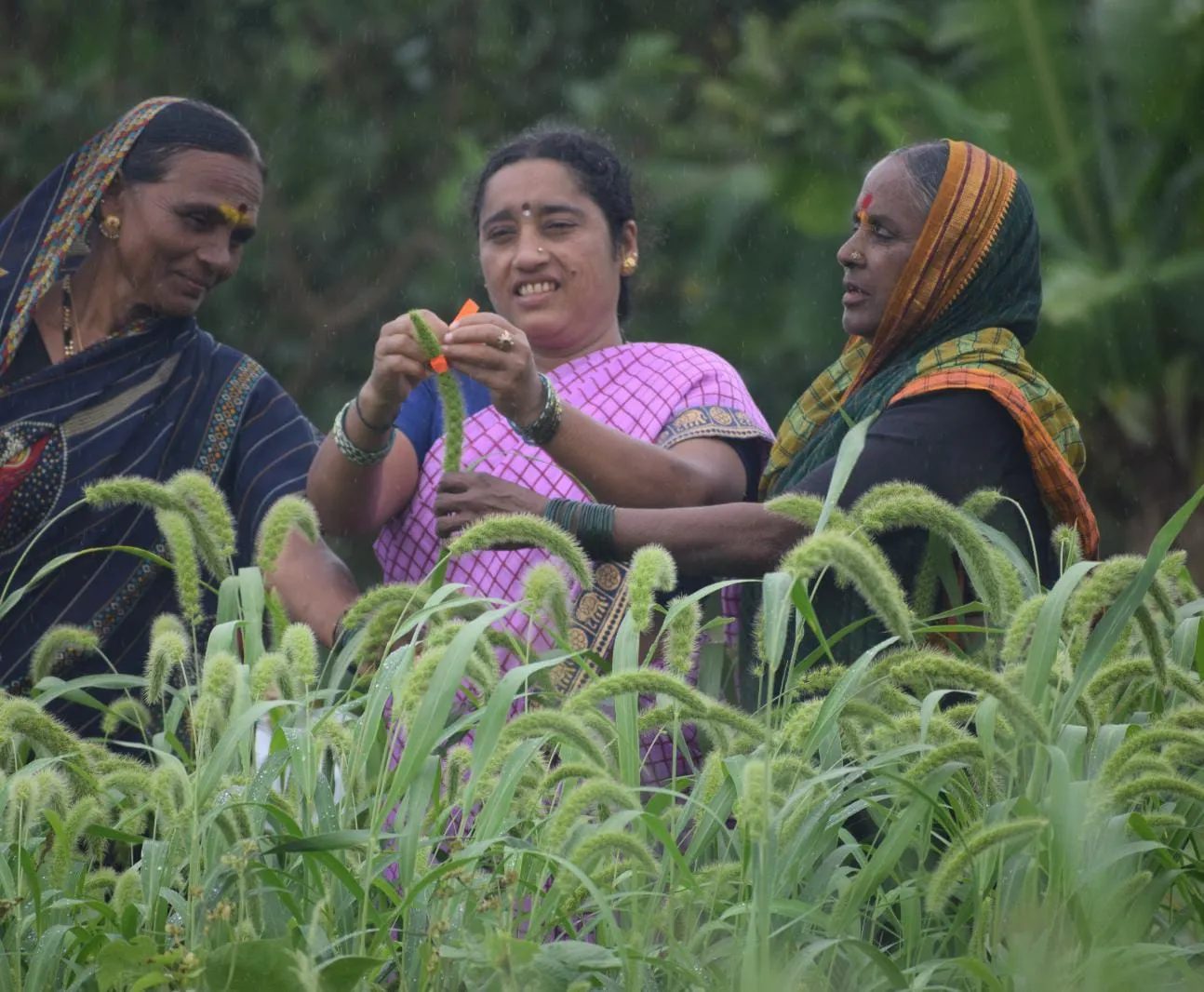
Three women farmers inspecting foxtail millet in a field in Karnataka
6,340farmer-breeders and seed savers across 20 districts of Karnataka
800+rice varieties and 120 millets conserved by its farmer network
32community seed banks reviving traditional seed saving and exchange
34traditional paddy varieties brought back from near extinction by the Save Our Rice campaign (since 2007)

Landless women, their own harvest

In Mattigatti village, Kundagol taluk, a group of landless women labourers leased an acre together and farmed it. "We had sufficient grains and vegetables at home," they said, "while others in the village were seeking government support." They harvested eight bags of groundnuts along with foxtail millet for their own kitchens.

Recognition

  • Kirloskar Vasundhara Mitra Honour, organisation category (2023)
  • India Biodiversity Awards, special mention for conservation of domesticated species (2018)
  • Parisara Prashasti, Government of Karnataka (2018-19)
  • Its farmer producer company won the Jaivik India Award for Best FPO (2022)

Sources: About Sahaja Samrudha; Seed conservation; Sustainable agriculture; Annual Report 2021-22.

Support one partner, one cause, or all seven.

Give to our general fund and the board will direct it where the need is greatest, or tell us which partner or cause moves you most.

Walk with us